Getting Your Driver's License
Getting your driver's license is an exciting adventure that starts with the right preparation. Whether you've just turned 17 or are a bit older, on this page you'll find everything you need to know — from the first step to the moment you hold your pink card in your hands. We'll guide you through the complete process so you know exactly what to expect.
Step-by-step plan for your driver's license
The journey to getting your driver's license consists of four clear steps. First, you request a health declaration from the CBR. This is a medical self-declaration confirming that you are physically and mentally fit to drive. Without this declaration, you cannot book a theory exam, so always start here. Step two is passing your theory exam. You'll learn traffic rules, road signs and how to behave in traffic. There are countless apps and online practice environments to help you prepare. The exam consists of 65 questions and you may make a maximum of 13 mistakes. Next, you start driving lessons at a certified driving school. During these lessons, you learn step by step how to control the car, participate safely in traffic and drive independently. Most students need between 30 and 45 lessons, but this varies per person. The final step is the practical exam at the CBR. During this exam of approximately 35 minutes, you demonstrate that you can drive independently and safely. If you pass, you receive your driver's license immediately.
Check out our comprehensive driving lesson packages and rates for more details.
The three driving phases
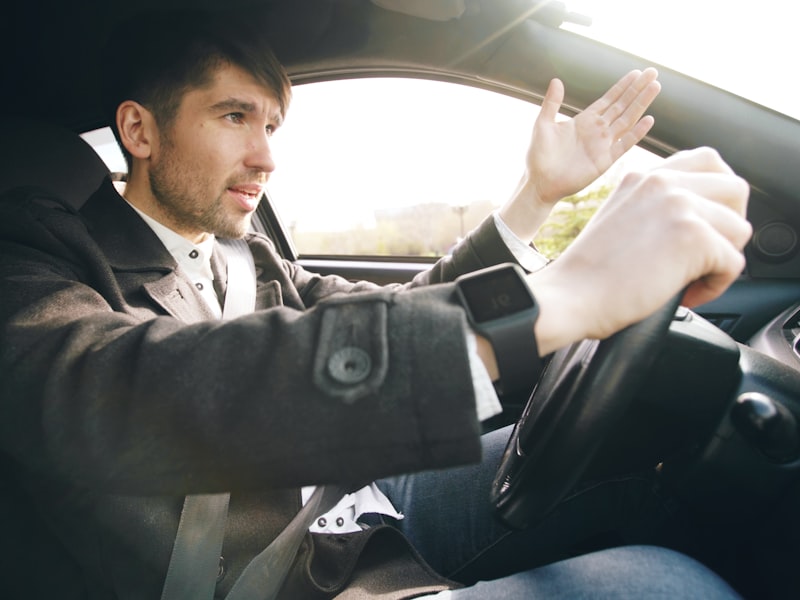
During your driving education, you go through three driving phases that together form the foundation of your driving skills. Each phase builds on the previous one, gradually turning you into a complete and safe driver. In phase 1: vehicle control, you learn the basic operation of the car. Think of shifting, steering, braking and accelerating. You practice in quiet areas so you don't immediately end up in busy traffic. The goal is to make the controls automatic, so you can shift your attention to the traffic around you. Phase 2 focuses on observation skills. You learn to systematically use your mirrors, check over your shoulder and maintain the correct sequence of looking. This is crucial for safely merging, turning and changing lanes. Many beginning drivers underestimate the importance of good observation habits, while this is one of the most important assessment points during the practical exam. In phase 3, you learn to look ahead and anticipate traffic. You scan the road further ahead, recognize dangerous situations early and adjust your speed and position. This is the level where you grow from a learner into an independent driver who can read traffic well.
What does a driver's license cost?
A frequently asked question is what getting your driver's license actually costs. The total costs depend on the number of driving lessons you need, but there are a number of fixed expenses to keep in mind. The health declaration costs approximately \xe2\x82\xac40. This is a one-time application to the CBR that you need before you can start your theory exam. The theory exam itself also costs around \xe2\x82\xac40. If you fail, you pay this amount again for a retake. Driving lessons make up the largest part of the costs. Expect an average of \xe2\x82\xac45 to \xe2\x82\xac55 per lesson hour. With an average of 35 lessons, you'll spend about \xe2\x82\xac1,575 to \xe2\x82\xac1,925 on lesson costs. Some driving schools offer packages that give you a discount on the total price. The practical exam costs approximately \xe2\x82\xac130. Here too, if you fail you pay the exam fee again. In total, you should expect an amount between \xe2\x82\xac1,785 and \xe2\x82\xac2,135 for your complete driving education. By practicing well and taking your theory seriously, you can avoid retakes and save money.
Frequently asked questions
When you start getting your driver's license, you probably have many questions. That's perfectly normal — it's a big and new journey after all. We've compiled the most common questions for you. Many people wonder how long it takes to get your driver's license. On average, it takes six to nine months, but this depends heavily on how often you take lessons and how quickly you learn. With two lessons per week, you can significantly speed up the process. Another frequently asked question is about choosing a good driving school. Pay attention to the pass rate, the instructor's experience and whether the driving school is affiliated with a trade organization. Always read reviews from other students as well. Furthermore, many beginners want to know whether they should choose a manual or automatic transmission. A license for manual also covers automatic, but not the other way around. It's therefore smart to choose manual, unless you're certain you always want to drive automatic. Also check out our pages about the theory exam and the practical exam for more information.
Frequently Asked Questions
- How old do you have to be to get your driver's license?
- You can start driving lessons from age 16.5. At 17, you can take the practical exam and drive with a coach through the 2toDrive program. From age 18, you may drive fully independently.
- How many driving lessons do I need?
- On average, students need between 30 and 45 driving lessons. This varies per person and depends on your learning ability, how often you practice and whether you choose manual or automatic. With automatic, you generally need fewer lessons.
- How long is my theory exam valid?
- Your theory certificate is valid for one and a half years from the moment you pass. Within that period, you must complete your practical exam, otherwise your theory expires and you have to redo it.
- What happens if I fail my practical exam?
- If you fail, you can book a new practical exam with the CBR. The costs are again approximately \xe2\x82\xac130. Your instructor will discuss with you what can be improved, so you're better prepared next time.
- Can I take my driver's license in another language?
- The theory exam is available in Dutch, English, Turkish, Arabic and German. The practical exam is always conducted in Dutch, but your instructor can help with translation during lessons.