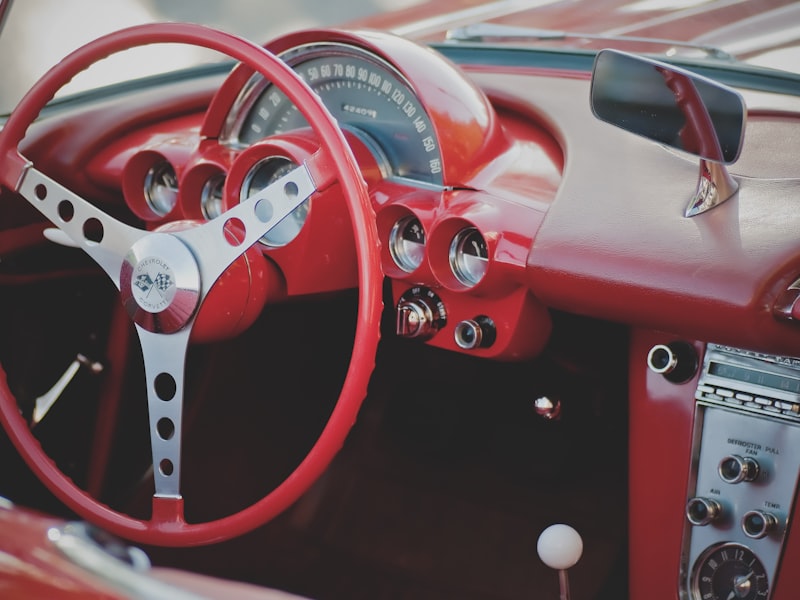
Vehicle Operation and Vehicle Control
Phase 1 of your driving education is all about the basics: learning how to operate and control a car. Without good vehicle control, you cannot safely participate in traffic.
What do you learn in phase 1?
In the first phase of your driving education, you get to know the car as a machine. You discover how the clutch works, how to shift smoothly between gears, how to hold the steering wheel properly and how to brake correctly. This may sound simple, but for most beginning driving students, it's quite a challenge to perform all these actions simultaneously. Your instructor usually starts in a quiet area or a calm neighborhood, so you can practice without the pressure of other traffic. The goal of phase 1 is to make operating the vehicle as automatic as possible. Only when you no longer have to think about shifting or braking can you direct your attention to the traffic around you. Think of dosing the gas pedal when pulling away, feeling the clutch bite point when starting, and turning the steering wheel smoothly in curves. You also learn the function of all buttons and levers in the car: indicators, windshield wipers, lights and mirrors. All these small skills together form the foundation of your entire driving career.
Mastering the clutch
The clutch is the most difficult component for many students in the beginning. Finding the bite point — that moment when the car starts to move without giving gas — requires feel and practice. When pulling away, you must slowly release the clutch pedal while simultaneously giving a little gas. If you do this too quickly, the engine stalls. If you do it too slowly, you'll soon smell the clutch burning. A particular challenge is starting on a hill. Here you must operate the handbrake, clutch pedal and gas pedal at precisely the right moment to prevent rolling backwards. Many driving schools practice this specifically, because it can also come up during the practical exam. Dosing the clutch is also important when driving slowly, for example in traffic jams or when parking. You then learn to control speed using only the clutch, without giving gas. This is also called "slipping the clutch." As you spend more hours behind the wheel, operating the clutch becomes increasingly natural. Most students have developed a good feel for the bite point after five to ten lessons.
Steering and shifting
Good steering begins with the correct hand position on the wheel. The most commonly used method is the "quarter to three" position: your left hand at nine o'clock and your right hand at three o'clock. From this position, you have the most control and can react quickly. When taking curves, you use the push-pull or hand-over-hand method, depending on how sharp the curve is. Your instructor will have you practice steering at low speeds so you get a feel for how much you need to turn. Shifting is another skill that receives a lot of attention in phase 1. You learn to recognize the correct shifting point by ear and by feel. If you shift too early, the engine has too little power. If you shift too late, the engine revs unnecessarily high and you use extra fuel. A common mistake is that students look at the gear lever while shifting. This is dangerous, because your eyes should be on the road. That's why you practice until you can shift blind. Smooth driving happens when steering and shifting come together. You learn to downshift before a curve, turn the wheel at the right moment, and accelerate again after the curve. This interplay makes driving comfortable for yourself and your passengers.
How many lessons do you need?
The total driving education takes an average of 20 to 40 lesson hours, depending on your learning pace and how often you practice. Phase 1, in which you master vehicle operation and control, typically covers about 10 to 15 hours. Some students need fewer, others more — and that's completely normal. Factors that play a role include your age, whether you have previous experience with vehicles such as a moped or scooter, and how often per week you have lessons. Those who drive twice a week make faster progress than someone who only practices once every two weeks. It's important not to compare yourself to others. Everyone learns at their own pace. Your driving instructor can give an estimate after a few lessons of how many hours you'll probably need. Some driving schools offer packages where you buy a fixed number of lessons, including the practical exam. This can be financially more advantageous than booking individual lessons. Keep in mind that phase 1 lays the foundation: if you take your time here, learning in the next phases goes faster. Solid vehicle control makes the difference between a confident and an insecure driver.