Looking Ahead and Thinking Ahead
In the final phase of your driving education, you combine everything you've learned. You learn to make independent decisions, recognize hazards and think ahead in traffic.
Phase 3: independent driving
In the first two phases of your driving education, your instructor gave you many directions. "Turn here," "brake now," "check your mirror." In phase 3, that changes. Your instructor increasingly steps back and lets you make the decisions. This is an exciting but necessary step, because during the practical exam, there's no one sitting next to you telling you what to do. Independent driving means you can follow your route using signs and navigation on your own, that you judge for yourself when to brake or shift, and that you decide yourself whether it's safe to merge or turn. It can feel unfamiliar at first. Many students notice they become insecure as soon as the instructor is quiet. That's normal. It's part of the learning process. Your instructor only intervenes when it's truly necessary for safety. The transition from guided to independent driving is gradual. First, your instructor takes small steps back: you may assess an intersection on your own, execute a merging maneuver by yourself. Later, you drive entire routes without directions. You learn to trust your own judgment. This self-confidence is crucial, not only for the exam, but for your entire future driving career as an independent driver.
Hazard perception
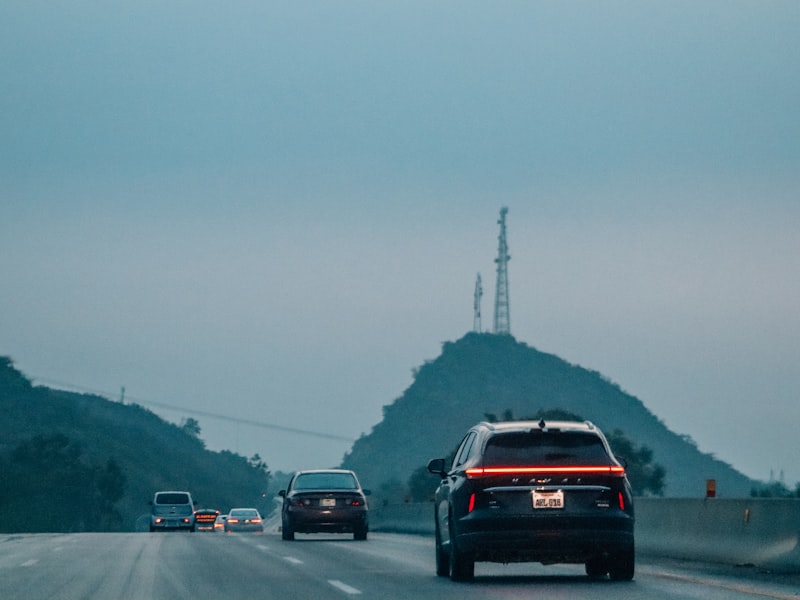
Hazard perception is the ability to see potential hazards before they actually occur. This is one of the most important skills you can develop as a driver. It's about learning to predict the behavior of other road users. A child playing with a ball on the sidewalk could suddenly run into the street. A cyclist riding ahead of you looking to the left is probably going to turn. A car at an exit with spinning wheels is about to pull away. You learn to recognize these kinds of signals through experience and through conscious practice. Your instructor initially points out these situations and asks you what could happen. Slowly, you learn to see these patterns yourself. Hazard perception also relates to adapting your driving behavior to conditions. In rain, you brake earlier; in a residential area, you drive slower; near a school, you're extra alert. You learn to assess which situations carry an increased risk and to anticipate them. The CBR tests hazard perception in both the theory exam and the practical exam. In the theory exam, you watch video footage in which you must recognize hazards. In the practical exam, the examiner assesses whether you react timely and adequately to traffic situations.

Developing traffic insight
Traffic insight is more than just knowing the traffic rules. It's the ability to quickly oversee a complex traffic situation and make the right decision. Experienced drivers do this automatically, but as a learner, you need to build it up step by step. Pattern recognition plays a major role here. The more often you experience a certain situation — a busy intersection, a narrow street with oncoming traffic, a school zone — the faster your brain has the correct reaction ready. Defensive driving is an important part of traffic insight. This means you always account for mistakes by others. You don't assume everyone follows the rules, but you're prepared for the unexpected. If a car on a priority road is driving a bit too fast, you account for the possibility that the driver won't yield to you. If you're approaching a cyclist from behind, you keep extra distance in case they suddenly swerve. You develop traffic insight best by driving a lot in different environments. City traffic requires different skills than driving on the highway or on rural roads. That's why your instructor ensures you gain experience in all kinds of situations. The broader your experience, the better your traffic insight becomes and the more confident you feel behind the wheel.

Ready for the exam?
The question "am I ready for the exam?" is one of the most frequently asked questions among driving students. The honest answer is: you're ready when you can drive safely, independently and predictably in various traffic situations. Your driving instructor plays an important role in this assessment, but there is also an objective measuring tool: the interim assessment, also called the "mid-term test." This test is administered by the CBR and is a kind of practice exam. An examiner drives with you and assesses whether you're ready for the real practical exam. The interim assessment is not mandatory, but is strongly recommended. It gives you a realistic picture of where you stand and what you still need to improve. Afterwards, you receive a detailed report with areas of attention. Many students also find the interim assessment useful for getting used to the tension of an exam situation. Once you've done the test and processed the feedback, you're optimally prepared for the real exam. Signs that you're ready: you can drive an unfamiliar route without problems, you react calmly to unexpected situations, your observation behavior is systematic and consistent, and you feel comfortable behind the wheel. Trust the judgment of your instructor — they have guided hundreds of students to the exam and know exactly when the moment is right.